

International Association of Literary Semantics Conference
Welcome!
We are delighted to host the 2027 conference of the International Association of Literary Semantics at the Institute of Applied Linguistics, University of Warsaw. After previous meetings in Kent, Reykjavik, or Genoa, this marks the first time an IALS conference
will be held in the capital of Poland.
The conference theme is “Hybrid Semantics: Media, Modes, and Meaning”.
The main conference will run from 17 to 19 June 2027. A special event for all guests
will take place on 17 June, and the conference dinner will be held on 18 June.
There will also be an optional post-conference excursion on 20 June to Żelazowa Wola,
the birthplace of Fryderyk Chopin.
Each conference day will begin with a plenary lecture.
We are happy to introduce the plenary speakers confirmed so far:
Peter Stockwell (University of Nottingham)
Grzegorz Kość (University of Warsaw)
We are also very pleased to announce that Maciej Świerkocki, an acclaimed writer whose recent
work includes the latest Polish translation of James Joyce’s Ulysses, will join us as a special-event
guest.
Please see the call for papers and further details below.
| Scientific committee
dr Józefina Piątkowska-Brzezińska dr hab. Marta Kaźmierczak |
Organising committee
dr Józefina Piątkowska-Brzezińska dr Anna Fornalczyk mgr Dariusz Skotarek |
Contact: IALS2027@uw.edu.pl
Call for papers
11th conference of the International Association of Literary Semantics:
“Hybrid Semantics: Media, Modes, and Meaning”
University of Warsaw
17th – 19th June 2027
(social and cultural events possible on 16th & 20th June, to be confirmed)
Proposal deadline: 15 January 2027
The 2027 edition of the IALS conference invites contributions that explore hybrid semantics – the ways meaning is produced, transformed, and negotiated when literary texts intersect with multiple media, languages, technologies, genres, and identities.
In this context, media refers to the material and technological forms through which texts circulate, modes to the semiotic and representational systems through which meaning is articulated, and meaning to the interpretive effects that emerge from their interaction.
Moving beyond models of meaning grounded in singular systems (one language, one medium, one authorial voice), this conference focuses on semantic emergence through hybridity: moments when meaning arises precisely because forms, modes, and interpretive frameworks collide.
We welcome scholars interested in how meaning is created in literary texts, understood in a broad and integrative sense. The conference aims to bring together a wide range of methodological approaches, including, but not limited to: theoretically informed close readings; stylistic, pragmatic, and discourse-based analysis; corpus-based, computational, and digital humanities methods; comparative, transnational, and historically grounded research.
By fostering dialogue across methodologies and disciplines, the conference seeks to advance new perspectives on literary semantics in hybrid contexts.
Conference themes & dimensions
The themes below indicate key areas of interest for the conference. They are not intended to be exhaustive or restrictive. We warmly welcome submissions that engage with literary semantics from other perspectives, concern other periods, and harness theoretical traditions not explicitly listed here.
- Intermediality
- Meaning that emerges when literature blends with other media such as visual arts, film, music, performance, or digital platforms
- Semantic shifts across modalities (text, image, sound, motion)
- Possible fields of enquiry include:
-
- The semantics of graphic novels
- Poetic meaning in social media formats (e.g. TikTok poetry, Instagram verse)
- Theatre work as a site of multimodal creation of meanings – including the trajectory from a play text to performance
- Various kinds of adaptation as semantic transformation rather than translation
- Multilingual and Transcultural Hybridity
- Semantic layering in texts that move between languages, cultures, and symbolic systems
- Meaning produced through linguistic friction, overlap, as well as how its emerging this way challenges translatability
- Topics may include:
-
- Code-switching and mixed-language texts
- Postcolonial and transnational literatures as sites for exploring hybridity
- Translation as hybrid meaning-making rather than a search for equivalence
- Translation as enrichment or co-presence rather than replacement of the source message and the resulting hybridisation of meanings:
e.g. facing-page bilingual editions of texts, audio-description as an added channel, co-presence of original and translated narrative in museums and exhibitions, translations accompanying musical performances, ‘patchworks’ of translations used as theatre scripts.
- Human and Machine Meaning-Making
- Hybrid spaces between human interpretation and computational models of semantics
- Literary meaning in the age of AI, algorithms, and digital humanities
- Possible questions include:
-
- AI-generated poetry and the problem of authorship
- Semantic embeddings and computational representations of meaning
- Interpretability and creativity in human–machine collaboration
- Genre and Form Hybridity
- Semantic innovation arising from hybrid literary forms
- Meaning produced when genres collide, overlap, or resist classification
- Areas of interest include:
-
- Prose-poetry, autofiction, lyric essay
- Interactive, nonlinear, or multimodal narratives
- Hybrid academic–creative forms
- Identity and Global Voices
- Hybridity in meaning shaped by identity, migration, and global circulation
- Literatures in which voice, language, and culture are inherently hybrid
- Fields of enquiry include:
-
- Diasporic and migrant writing
- Multilingual poetry and oral–written traditions
- Semantic negotiations of selfhood, belonging, and displacement
Practical information
We invite proposals for papers of 20 minutes (+10 minutes for discussion)
Please submit your proposal via the following form by 15 January 2027. Participants will be notified of acceptance or rejection by 22 February 2027.
Those wishing to propose a Special Interest Group should submit their proposal by email (IALS2027@uw.edu.pl) by 15 December 2026.
There will be a registration fee that covers participation, lunches and coffee breaks.
Please note that all participants are required to hold valid membership in the International Association of Literary Semantics for 2027. Membership details are available here: https://ials.ac.uk/membership/
Selected contributions, subject to positive reviews, may be published in a special issue of the Journal of Semantics. Further details regarding this will be announced on our website soon.
Keynote speakers
 Peter Stockwell is Professor of Literary Linguistics at the University of Nottingham (UK), and a Fellow of the English Association. He has published 25 books and over 100 articles in stylistics, sociolinguistics, science fiction and applied linguistics, including Digital Teaching for Linguistics (2022), Cognitive Poetics (2020), The Language of Surrealism (2017), Texture: A Cognitive Aesthetics of Reading (2009), and The Poetics of Science Fiction (2000). He co-edited Practising Stylistics (2026), Immersion (2025), Reading Fictional Languages (2024), Cognitive Grammar in Literature (2014), The Cambridge Handbook of Stylistics (2014), The Language and Literature Reader (2008) and Contemporary Stylistics (2007). His work in cognitive poetics has been translated into many languages, including Chinese, Japanese, Polish, Persian, Russian and Arabic.
 Grzegorz Kość is an Associate Professor of American literature who served as Director of the American Studies Center at the University of Warsaw from 2016 to 2024. He is the author of Robert Lowell: Uncomfortable Epigone of the Grands Maîtres (Peter Lang, 2005) and Robert Frost’s Political Body (Boydell & Brewer, 2014). He has published articles in journals such as the Wallace Stevens Journal, a/b: Auto/Biography Studies, Partial Answers, College Literature, the Journal of Modern Literature and the Review of English Studies. He has coedited, with Steven Gould Axelrod, Robert Lowell’s Memoirs (Farrar, Straus and Giroux, 2022) and, with Thomas Austenfeld, Robert Lowell in Context (Cambridge University Press, 2024). He is currently working, again with Steven G. Axelrod, on a new edition of Lowell’s critical essays, Essays and Interventions, to be published with Farrar, Straus and Giroux.
Special event guest

Foto: Bartosz Kałużny
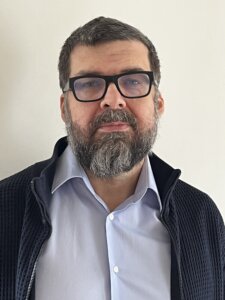
Maciej Świerkocki (b. 1961) – former academic teacher, a Ph.d. in comparative literature, an award-winning freelance translator, screenwriter and novelist. He’s translated more than 80 books from English into Polish, including works by John Barth, Angela Carter, Cormac McCarthy, Robert Graves, Richard Hughes, Jack Kerouac, Henry Miller, John Irving, Eleanor Catton, John Updike, Richard Flanagan, Joseph Conrad, Samuel Beckett and James Joyce. His prose was published in English in The Tampa Review and The Yellow Nib. His translation of James Joyce’s Ulysses (2021) received the “Gdynia” literary prize for the best translation of the year (2022). Author of Łódź Ulissesa (2021), an essay/diary of translating Ulysses, which was honoured with the Tadeusz Kotarbiński Award for the best Polish book on arts/humanities in 2023. Member of the Polish Writers’ Association (SPP) and the Polish Film Academy (PAF). He lives and works in Łódź, Poland.
Travel & accommodation
Details coming soon
Social programme – special events
Details coming soon
Excursion
Conference participants are invited to join an excursion to Żelazowa Wola, the birthplace of Fryderyk Chopin. This excursion offers participants an opportunity to experience one of Poland’s most significant cultural landmarks, set amid picturesque gardens and the tranquil landscape of the Mazovian countryside. The visit will provide insight into the life and legacy of Poland’s most celebrated composer, and will include a piano recital featuring his works, offering the opportunity to hear his music performed in a setting closely connected to his life and heritage. It will also provide a pleasant setting for informal networking and cultural exchange outside the conference programme.
The site is located approximately 50 km from Warsaw; transportation will be provided by coach. Final arrangements will be confirmed based on the number of participants expressing interest during the registration process. More details coming soon.